Interview · ʻĀinalytics
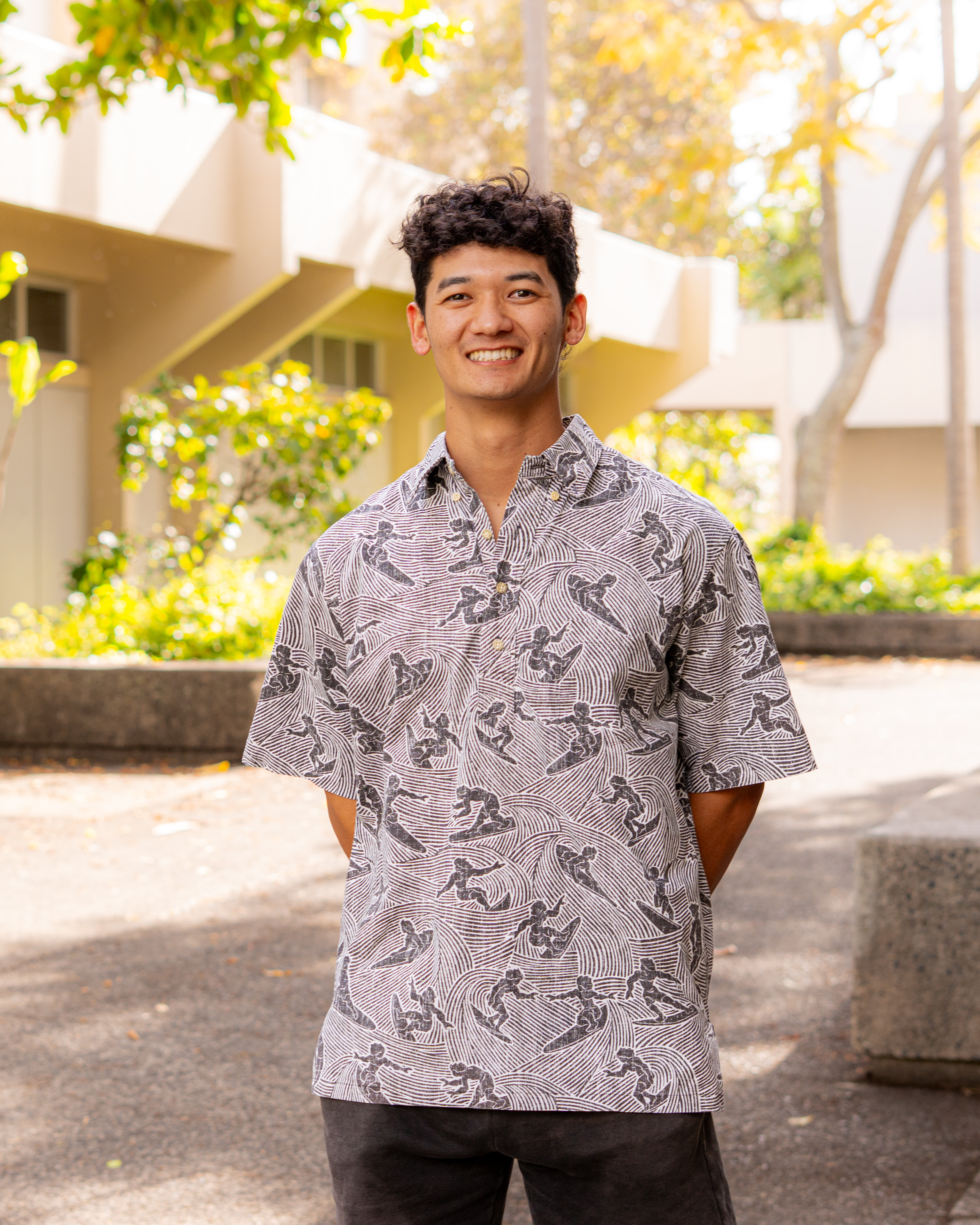
Interview with Cole Phillips (@justsmallkinethings)
Published September 25, 2026 · Interview by Koa Rubenstein
The Interviewee
Cole Phillips
Founder, Just Small Kine Things | Digital Creator & Entrepreneur
Cole Phillips is a University of Hawaiʻi at Mānoa student, digital creator, and founder of Just Small Kine Things, a platform highlighting Hawaiʻi’s culture, communities, and local businesses. Through digital storytelling and social media, Phillips connects audiences with businesses and people across Hawaiʻi. His work offers a young entrepreneur’s perspective on building a career in Hawaiʻi and the role digital media can play in supporting local communities and businesses.
“I don’t think the answer is for everyone to leave Hawai‘i and come back later. I think we need to stay and build now.”
— Cole Phillips
The Interview
K = Koa Rubenstein · C = Cole Phillips
K: What originally inspired you to start Just Small Kine Things and use digital storytelling to highlight Hawaiʻi’s culture, communities, and local businesses?
C: When I went to college at UH Manoa and simultaneously moved into town, I began to feel like the culture I had grown up loving was slowly becoming watered down. I saw many of my peers who were transplants, who had chosen to make Hawai‘i their home, struggle to adapt to the local culture and understand the nuances that come with it. At the same time, I watched many of my local peers, friends I had grown up with, as well as family members, move to the mainland. Seeing both of these experiences unfold made me realize how important it was to preserve the culture that shaped me. So the goal of Just Small Kine Things is to preserve and celebrate the culture I fell in love with growing up, so that one day, when I have kids of my own, that culture will still be here for them to experience, appreciate, and fall in love with too.
K: Just Small Kine Things has grown into a platform that highlights Hawaiʻi’s culture, communities, and local businesses. What role do you think platforms like yours can play in supporting Hawaiʻi’s local businesses and economy?
C: Social media has become one of the primary ways people discover, interact with, and decide where to spend their money. So local platforms and creators have an ability to influence what our community pays attention to and supports. I genuinely believe social media can play a huge role in supporting local businesses and strengthening our local economy. But I also think a lot of local businesses are too slow to adapt. There’s still a very old-school approach to marketing in Hawai‘i, where businesses wait until something is proven before they invest in it. By the time they’re ready to evolve, they’re often already behind, and now they’re trying to catch up to something they don’t fully understand. I’m starting to see more businesses recognize the value of social media and creator partnerships, but many are still approaching it like traditional advertising. Their content isn’t strong, budgets are often far below what creators are offered by businesses on the mainland, and there can be too much creative control in collaborations. I want to see Hawai‘i’s local business community become more proactive instead of reactive. We need to adapt to how people actually discover, engage with, and support businesses today.
K: You’ve talked about how some of your most valuable experiences at UH Mānoa have happened outside the classroom. How have the relationships and experiences you’ve built there shaped your path as a creator and entrepreneur so far?
C: UH taught me so much more than what I learned in the classroom. It taught me confidence, how to work hard, persevere, meet people, ask for help, and advocate for myself. It taught me to take risks, handle rejection, take initiative, and become a leader. It taught me how to make mistakes, learn from them, and bounce back. It taught me to be resourceful, comfortable with who I am, and how to find my people. Most importantly, it taught me how to be independent. I didn’t realize I was learning all of these things at the time, but looking back, I can see how every single one has shaped the way I approach entrepreneurship today.
K: Running a business in Hawaiʻi comes with challenges that entrepreneurs elsewhere may not face to the same degree. From your experience working with local businesses, what makes building and sustaining a business here particularly difficult and where do you think storytelling and digital media can make a difference?
C: People often talk about how difficult it is to run a business in Hawai‘i, and on paper, that’s true. To be completely honest, I haven’t run a business anywhere else, so I can’t speak to that from experience. But I can speak to what I’ve seen, and my intuition is that doing business here is pretty incredible. So many of the people I meet have goals that are bigger than themselves or the money they make. Whether they’re small business owners or executives at large corporations, I constantly meet people who are thinking about Hawai‘i and its people. They ask themselves, “How can my business, and the work I get to do, give back to Hawai‘i and make life better for the people here?” Of course, that isn’t everyone. But I genuinely believe the proportion of impact-driven business leaders in Hawai‘i is higher than in most places in the world. There’s something special about doing business in a place where so many people see their work as an opportunity to contribute to the community that raised them.
K: Hawaiʻi’s high cost of living, especially housing, makes it difficult for many young people to stay. Has that affected how you think about building a career or business here after college?
C: Not even kidding, the high cost of living in Hawai‘i affects almost every decision I make. And my perspective on building a career here after college is probably different from most people’s. A lot of people will tell you, “Leave for the mainland. There are better opportunities, higher salaries, and a lower cost of living. Then, when you’re established, move back.” I understand why that can be a good path, and for some people, it absolutely is. But I also think there are some holes in that logic. But let’s start with the truth: there aren’t enough opportunities in Hawai‘i, especially for people coming straight out of college. And yes, there are higher-paying jobs in cities with a much lower cost of living. But I don’t think telling everyone to leave can be the solution. If our answer to Hawai‘i’s lack of opportunity is simply, “move away,” then we’re just kicking the can down the road. We have to create more opportunities here. And unfortunately, I think young people are going to have to be a big part of making that happen. We need to be the ones creating businesses, building new industries, bringing new ideas, and pushing Hawai‘i forward. We need to keep our talent here. We need to keep our young minds here. Because let’s be real, the boomers with all the money and influence don’t have what it takes to solve this issue, if they did, they would’ve done it by now. The only way that changes is if more young people stay, get involved, and start building. I don’t think the answer is for everyone to leave Hawai‘i and come back later. I think we need to stay and build now. It’s harder, but if we want Hawai‘i to become a place where the next generation can afford to live, work, and succeed, someone has to start creating that future here.
K: For a lot of young people who grew up in Hawaiʻi, staying home can mean weighing family and community against housing costs, career opportunities, and financial stability. What are you seeing among people your age when they think about whether they can realistically build a future here?
C: What I see happening with my generation is a growing sense of hopelessness. A lot of young people feel like the system has failed them. They’re carrying tens or even hundreds of thousands of dollars in student debt, working jobs that don’t pay enough to live comfortably on their own, and looking at homeownership as something that may never be within reach. Starting a family feels financially impossible for many, and the major life milestones we were told to expect growing up keep getting pushed further and further away. It feels like everyone is making sacrifices. The version of adulthood we imagined growing up looks completely different from the reality we’re facing. At the same time, we’re constantly being told that the economy is doing great. We see stocks hitting record highs, the rise of the first trillionaire, and the wealthiest people continuing to accumulate more while seemingly facing few consequences for abusing the system. We watch our political leaders appear increasingly disconnected from the people they represent, while corporations and wealthy donors seem to have more influence than ever. That disconnect takes a toll on young people. It creates frustration, distrust, and a feeling that playing by the rules isn’t going to get us where we want to go. I think that’s part of what’s pushing people toward more extreme political ideas and riskier financial decisions, whether that’s sports gambling, high-risk stock trading, or chasing the next big opportunity. Everyone seems to be searching for their golden ticket out. And I think the saddest part is that most people still want to build a life here. They want to stay, have a home, start a family, and build something meaningful. But many have simply accepted that the life they’ll have here probably won’t look anything like the life they imagined growing up.
K: When conversations about housing and development happen, do you think there’s a disconnect between what developers, investors, or policymakers believe Hawaiʻi needs and what local young people and working families actually want? If so, where do you see that disconnect most clearly?
C: I don’t have a ton to say about this besides I think everyone, developers, investors, and policy makers all want the best for the people. It’s beneficial for everyone if they could sell their homes to local people. The problem is everything outside of their control, I think their be too much red tape slowing down development, making things more expensive.
K: As Just Small Kine Things has grown, what have you learned about the business side of content creation, such as working with brands and deciding which opportunities to pursue?
C: Yes, I’m very fortunate as a content creator to have been able to carve out a career from my following. I also have peers with much larger followings who are still struggling to turn their audience into a sustainable career. I think luck has played a role in my journey, but I also believe one thing that has made a difference is learning to treat my page like a business rather than just a social media account. That shift in mindset has really separated my career trajectory from some of my peers. One of the best things I’ve done for myself is find mentors who can help me navigate the business side of what I’m building. Because honestly, I’m not naturally a business person. I didn’t study business, I didn’t grow up around business, and I never once imagined growing up that I would become a business owner. Yet, somehow, here I am. I’ve had to learn as I go, and having people who are willing to share their experience and guide me has made a huge difference.
K: Do you think content creation, digital marketing, and online entrepreneurship can realistically create more opportunities for young people to build careers in Hawaiʻi rather than having to leave?
C: Definitely. I think Hawai‘i is actually a perfect place to do this. For most of Hawai‘i’s history, one of the biggest challenges to doing business here was our geographic isolation. We were thousands of miles from the rest of the world, which made it difficult to access markets, talent, and opportunities. But that barrier doesn’t exist in the same way anymore. The world is connected online, and I think Hawai‘i needs to lean into that much more. On the creative side, the opportunity is even greater. Hawai‘i is beautiful, our culture is incredibly rich, and we’re already a destination for creatives from around the world. The proof is in the pudding: in the last few years, Lilo & Stitch, Moana, and Chief of War have all found major mainstream commercial success while putting Hawai‘i and Polynesian culture at the center of their stories. I think the world is ready for Hawai‘i to have an even greater cultural influence. We already have it, we just haven’t fully leveraged it. Digital marketing, content creation, film, and other creative industries give us an opportunity to share our culture with the world while creating entirely new careers and industries here at home. I think we should use this momentum to build something bigger: export our culture, create new opportunities for our people, and build
K: You have a unique perspective on Hawaiʻi through your work with local businesses, young people, and creators. Looking ahead, what gives you the most hope that Hawaiʻi can remain a place where local people can not only stay, but build successful lives and careers?
C: I say this a lot, but I believe hope is a choice. We can look at the glass and say, “It’s half empty,” which, honestly, it is. We can complain about everything that’s wrong and accept that as our reality. Or we can choose to figure out how to fill the glass back up. I try to live my life choosing the latter. So there isn’t one specific thing that gives me hope. I have hope because I have dreams and goals for myself and for the future of Hawai‘i, and I genuinely believe they’re achievable. At the end of the day, I think that’s all hope really is: wanting something to happen and believing that it can.
This interview was conducted via email. Responses are presented as submitted.

