Interview · ʻĀinalytics
Interview with Timothy Burke
Published September 17, 2026 · Interview by Koa Rubenstein
The Interviewee
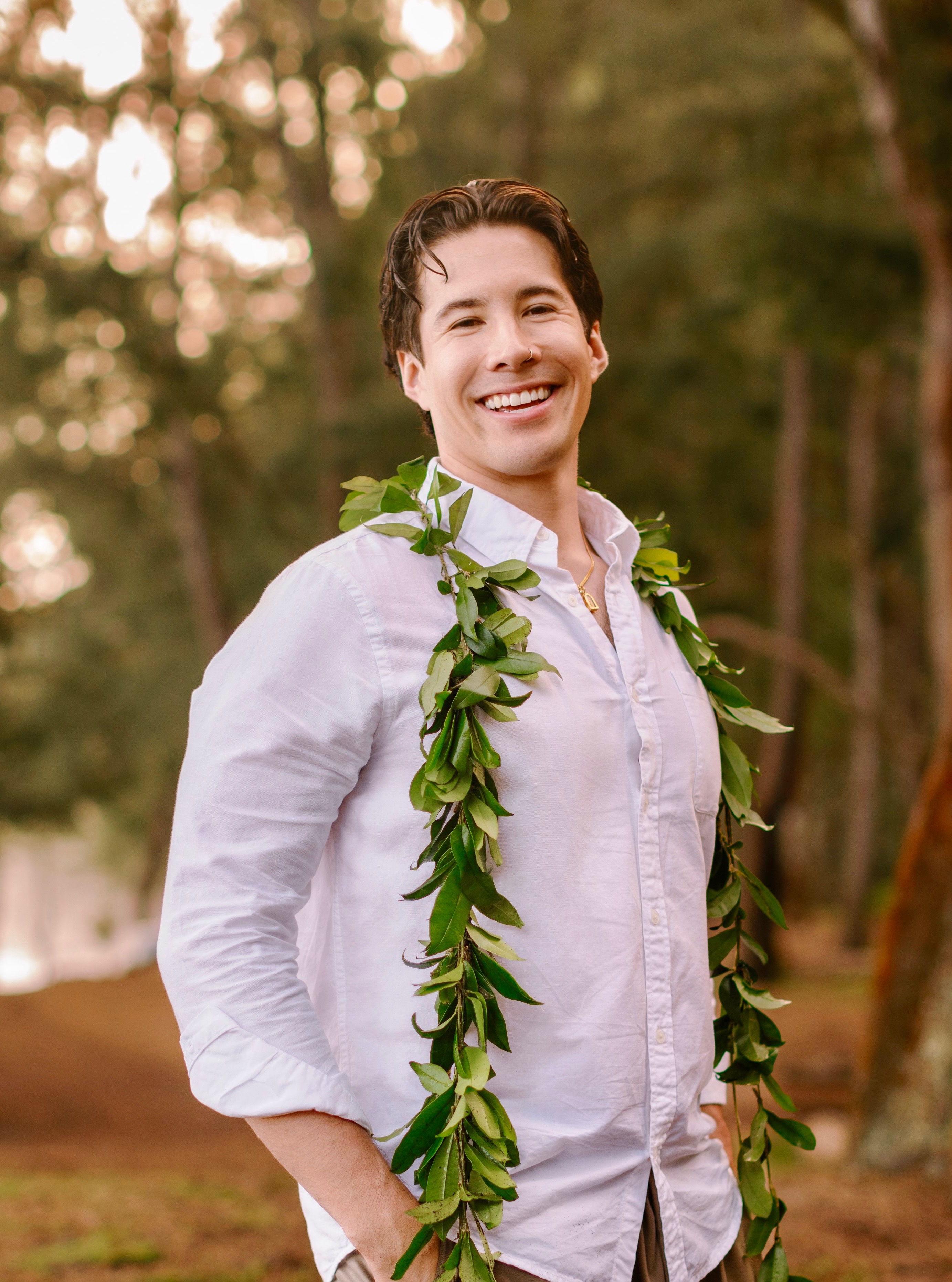
Timothy Burke
Founder & CPA | Finance Professional & Content Creator with 110K+ Followers
Timothy “Timmy” Burke is a Certified Public Accountant (CPA), Kamehameha Schools Hawaiʻi alumnus, and founder of Burke Accounting & Advisory LLC. Originally from Hilo, Hawaiʻi, he left the islands to pursue his education and build a career in accounting and finance, including experience auditing venture capital funds in Silicon Valley. Today, he uses that experience through his CPA practice to support businesses and families in Hawaiʻi and beyond with accounting, tax planning, financial strategy, and long-term wealth building.
“My long-term hope is to help people build stronger businesses, create wealth, and help break cycles of generational poverty in Hawaiʻi.”
— Timothy Burke
The Interview
K = Koa Rubenstein · TB = Timothy Burke
K: You grew up in Hilo before building your career on the continent. What originally pushed you to look outside Hawaiʻi for professional opportunities, and do you think young people growing up there today face that same pressure?
TB: I always wanted to explore outside of Hilo, study business, play college football, and experience something new. Going to college in Silicon Valley exposed me to startups, accounting, finance, and mentors who helped shape my career. I think young people in Hawaiʻi still face some of that same decision today, especially depending on the career they want to pursue, but technology and remote work have also created more opportunities than before. Ideally, young people should have the flexibility to stay, leave for a period of time, or eventually come home depending on what is best for them.
K: The “Hawaiʻi diaspora” has grown as families and young professionals move to the continent. As a Kamehameha Schools graduate who built a career on the continent, how do you see this movement reshaping local communities and Hawaiʻi’s cultural fabric?
TB: I think the Hawaiʻi diaspora can become a real strength for Hawaiʻi if people stay connected to home. When I left, my parents were sad to see me go, but they were also excited for me to gain new experiences, grow, and build opportunities outside of Hawaiʻi. Leaving never meant leaving Hawaiʻi behind for me, because I carried my family, culture, values, and aloha with me wherever I went. If people who leave eventually mentor others, invest back home, create jobs, share knowledge, or return with new experience, the diaspora can become an asset to Hawaiʻi rather than simply a loss.
K: Leaving Hawaiʻi is often described as a “brain drain,” but the diaspora also represents a large network of Hawaiʻi-born professionals with experience, capital, and connections elsewhere. How could Hawaiʻi better engage that network to benefit the islands?
TB: I think Hawaiʻi could benefit tremendously from building stronger connections between people at home and Hawaiʻi-born professionals living elsewhere. That could start through mentorship programs, alumni networks, internships, and relationships between schools and professionals outside the state. Someone may leave Hawaiʻi to build their career, but they can still mentor students, hire people from Hawaiʻi, create remote jobs, invest in local businesses, or eventually return home. There are so many people from Hawaiʻi doing great things around the country and the world, and creating stronger ways for them to stay involved could be extremely valuable.
K: A major focus of ʻĀinalytics is Hawaiʻi’s housing crisis, where homeownership feels increasingly out of reach. From your perspective in private-sector finance, what macro-level financial forces are making it so difficult for younger generations in Hawaiʻi to build wealth and eventually own a home?
TB: One of the biggest challenges is that housing prices and the overall cost of living have grown faster than many local incomes. Hawaiʻi also has limited land, high construction and material costs, strong housing demand, and competition for property from people and capital outside the state. When more of someone’s paycheck goes toward rent, food, utilities, transportation, and other basic expenses, there is naturally less left over to save for a home or invest for the future. That’s why I think both stronger earning opportunities and financial education are important in helping younger generations build wealth and eventually reach homeownership.
K: From your perspective as a CPA, what are some of the biggest structural barriers to building generational wealth for families in Hawaiʻi? Are there financial realities, such as tax structures or the cumulative effect of Hawaiʻi’s high costs, that people often overlook when discussing the cost of living?
TB: One of the biggest barriers is simply how much of a family’s income can be consumed by the cost of living in Hawaiʻi. Housing, food, utilities, transportation, insurance, taxes, and everyday expenses all add up, leaving less money available to invest, buy property, build retirement savings, start businesses, or create assets that can eventually be passed to the next generation. From my perspective as a CPA, building wealth isn’t only about how much someone earns, but also how much they are able to keep, invest, and grow over time. That’s why I believe financial literacy, tax planning, investing, retirement planning, and business ownership can all play an important role in creating long-term financial stability.
K: Your background includes venture capital auditing and private-sector finance. What would it take to shift the focus of outside investment in Hawaiʻi from passive assets, like real estate, toward productive capital that helps locally founded companies scale without having to leave the islands?
TB: I think Hawaiʻi needs more investment options that make it practical and attractive to put capital directly into local businesses. Through auditing venture capital funds, I’ve been able to see how professional investors evaluate companies and allocate capital, but traditional venture capital is focused heavily on businesses capable of growing extremely quickly and may not fit every Hawaiʻi company. There could be more opportunities through locally focused investment funds, community investment vehicles, crowdfunding, and partnerships between entrepreneurs and investors. If more capital can flow into businesses that create jobs, build products, hire locally, and keep money circulating within Hawaiʻi, I think that can create meaningful long-term benefits.
K: Hawaiʻi businesses face unusually high costs, including commercial rent, shipping, labor, and limited space. From an accounting perspective, how does operating in that environment fundamentally change a small business’s unit economics, and what separates the businesses that survive those pressures from those that don’t?
TB: Operating in Hawaiʻi makes understanding your numbers especially important because businesses often have less room for error. Shipping, rent, payroll, utilities, inventory, insurance, and taxes can all be expensive, while there is still a limit to how much customers are willing or able to pay. The businesses that put themselves in the strongest position are usually the ones that understand their margins, price correctly, control costs, manage cash flow, and know which products or services are actually profitable. A business can bring in a lot of revenue and still struggle if the margins and cash flow are not there, so strong financial management is extremely important.
K: From a tax and accounting policy perspective, are there specific incentives, structures, or regulatory changes that you think could make it easier for local entrepreneurs to start businesses, reinvest their profits, and retain capital in Hawaiʻi?
TB: I think anything that makes it easier for small businesses to access capital, reinvest their earnings, hire locally, and navigate the administrative side of running a business could be helpful. Small business owners already wear a lot of hats, so simplifying unnecessary burdens and making resources easier to understand can allow them to focus more time and money on growing their businesses. I also think financial education is a major part of the solution because many entrepreneurs are extremely talented at what they do but were never taught accounting, taxes, cash flow, budgeting, or financial planning. Better access to those resources can help local business owners make stronger decisions and retain more of what they earn.
K: For young people in Hawaiʻi, professional opportunities in fields like finance, accounting, and technology can feel more limited than on the continent. What would it take to build more high-paying professional career pipelines in Hawaiʻi rather than continuing to export talented young people to the mainland?
TB: I think it starts by exposing students to those careers earlier and creating clear pathways into them through internships, mentorships, recruiting relationships, and partnerships between Hawaiʻi schools, local employers, alumni, and companies outside the state. Remote work also creates a major opportunity because someone can increasingly live in Hawaiʻi while working in accounting, finance, technology, consulting, and other professional fields for companies located elsewhere. The hardest part for many young professionals is getting those first few years of meaningful experience. If Hawaiʻi can create more ways for students to get that experience while remaining connected to home, I think it can help build a much stronger professional workforce locally.
K: For a young person growing up in Hawaiʻi today who wants to build wealth, own a home, and have a successful career without permanently leaving the islands, what would you tell them? What do you think needs to change to make that path more realistic?
TB: I would tell them to start learning early, think long term, and understand that there are multiple paths to building a successful life in Hawaiʻi. Learn about budgeting, credit, taxes, investing, retirement accounts, compound interest, and how different career choices affect your earning potential, and focus on consistently building skills and investing over time rather than chasing shortcuts. I also don’t think anyone should feel guilty if they need to leave Hawaiʻi temporarily to gain experience, because leaving can be part of eventually bringing new knowledge, relationships, and opportunities back home. At the same time, I would love to see Hawaiʻi continue creating more high-paying jobs, stronger career pipelines, greater access to financial education, and an environment where families have enough left over after basic expenses to save, invest, and build wealth.
This interview was conducted via email. Responses are presented as submitted.

